


Shrink packaging of small appliances, packaging of electronic parts and accessories, heat sealing of hardware tool assembly
Technical Specifications
Specifications
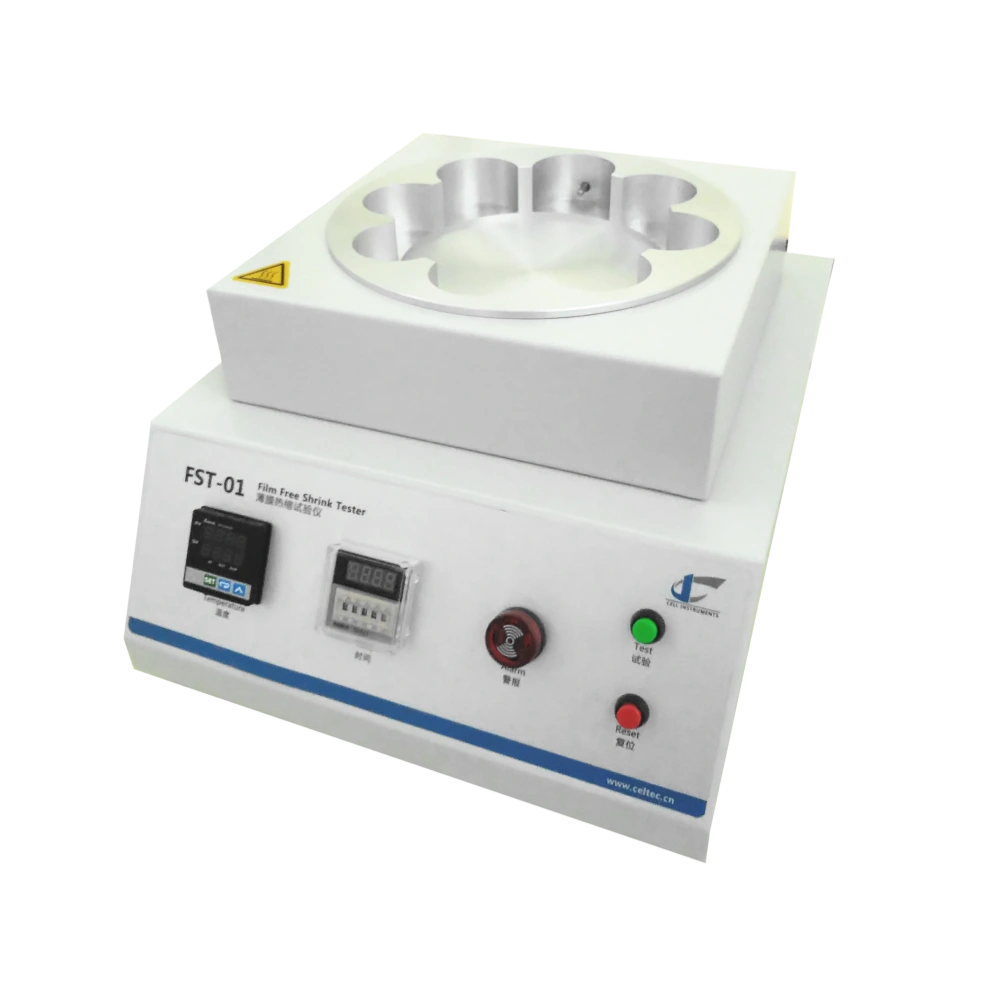
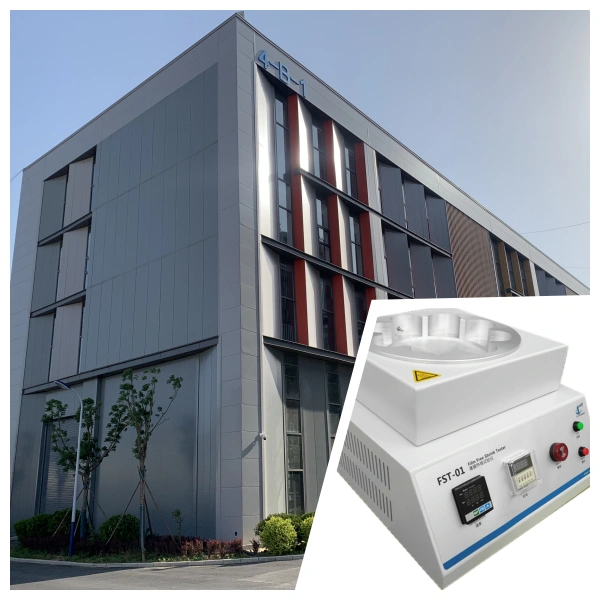
FST-01 Film Shrinkage Tester
Specimen Size
≤100 mm x 100 mm
Temperature Range
Room temperature ~ 200°C
Accuracy
±0.3°C
Power Supply
AC 110~220V 50Hz
Heating medium
Heated by water bath/Heated by oil bath
Principle
Step 1 Sample Preparation
Cut the plastic film into 100 mm × 100 mm squares
Draw central lines along the Machine Direction (MD) and Transverse Direction (TD)
Step 2 Initial Measurement
Measure the length of the marked lines
Record as Initial Length (L₀) in both MD and TD
Step 3 Thermal Treatment
Place the sample in a preheated medium (e.g., water or air) at the target temperature (e.g., 130°C)
Soaking time: 10 seconds, with the sample in an unrestrained condition
Step 4 Cooling
Remove the sample and allow it to cool naturally to room temperature
Ensure the sample lies flat without distortion
Step 5 Final Measurement
Measure the lengths of the lines again
Record as Final Length (L₁)
Step 6 Shrinkage Calculation
Use the formula:
Shrinkage (%) = (L0 – L1) / L0 × 100
thermal shrinkage tester
The Importance of Film Shrinkage Tester
Unrestrained Linear Thermal Shrinkage
Necessity of Testing
Conducting heat shrink testing is essential for ensuring product quality and performance reliability.
1.Core means of quality control
The heat shrinkage performance directly affects the dimensional stability and applicability of the material. The heat shrinkage test can monitor the changes of the material during the heating process and detect abnormalities in time.
2.Improve packaging adaptability and user experience
Whether the heat shrink film is tight and beautiful is related to the packaging quality and brand image. Testing can avoid problems such as wrinkles, warping, and breakage.
3.Meet standards compliance and market access
Heat shrink materials must comply with ASTM D2732, ISO 14616 and other standards. Heat shrink testing ensures that products meet technical requirements.
4.Promote innovation and material optimization
Thermal shrinkage test is an important means to evaluate the thermal stability of new materials, which is helpful for R&D and structural design.
Testing Advantages
Ensure product consistency
Discover defective materials
Support factory inspection and release
Improve packaging fit and damage resistance
Ensure transportation stability and appearance display
Enhance user satisfaction and brand trust
Avoid non-compliance risks
Meet third-party testing requirements
Support export and bidding
film heat shrink tester
Frequently askedquestions
What is the main purpose of a shrinkage tester?
A shrinkage tester is used to measure the linear thermal shrinkage of plastic films and sheets when exposed to elevated temperatures. It helps assess the dimensional stability of packaging materials during heat sealing, steam sterilization, or shrink-wrapping processes. Common applications include food packaging, medical films, and industrial shrink films.
Which standards does the shrinkage test follow?
The most commonly used standard is ASTM D2732, which specifies the method for determining the unrestrained linear thermal shrinkage of plastic film and sheeting. Other related standards may include ISO 14616.
What heating media are used during the test?
Shrinkage tests can use either a temperature-controlled water bath or a hot air oven as the heating medium. Water baths are ideal for precise and uniform heating, while air ovens are suitable for materials that cannot be exposed to water.
Does the sample need to be fixed during the test?
No. According to ASTM D2732, samples should remain unrestrained during the heating process, meaning no clamping or force should be applied. This allows the sample to shrink freely and reflects its natural thermal shrinkage behavior.
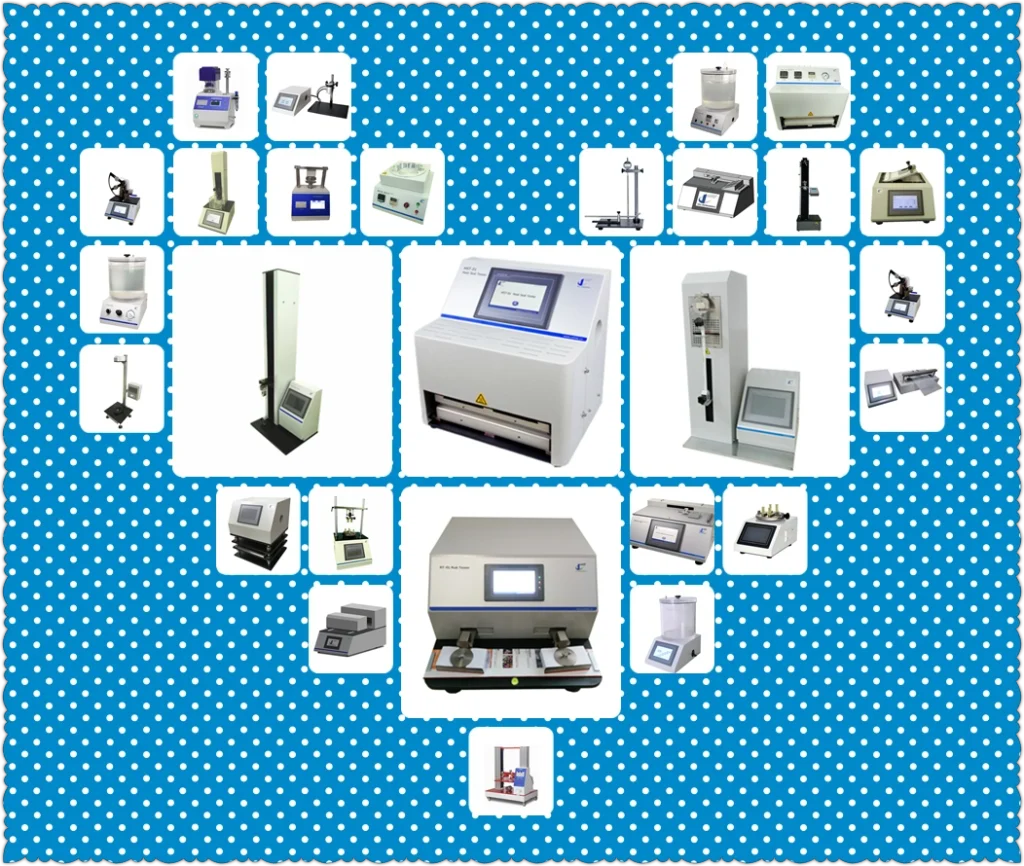
Comprehensive Material Quality Control Testing Solutions
Cell Instruments Advantages
01
Professional manufacturer background
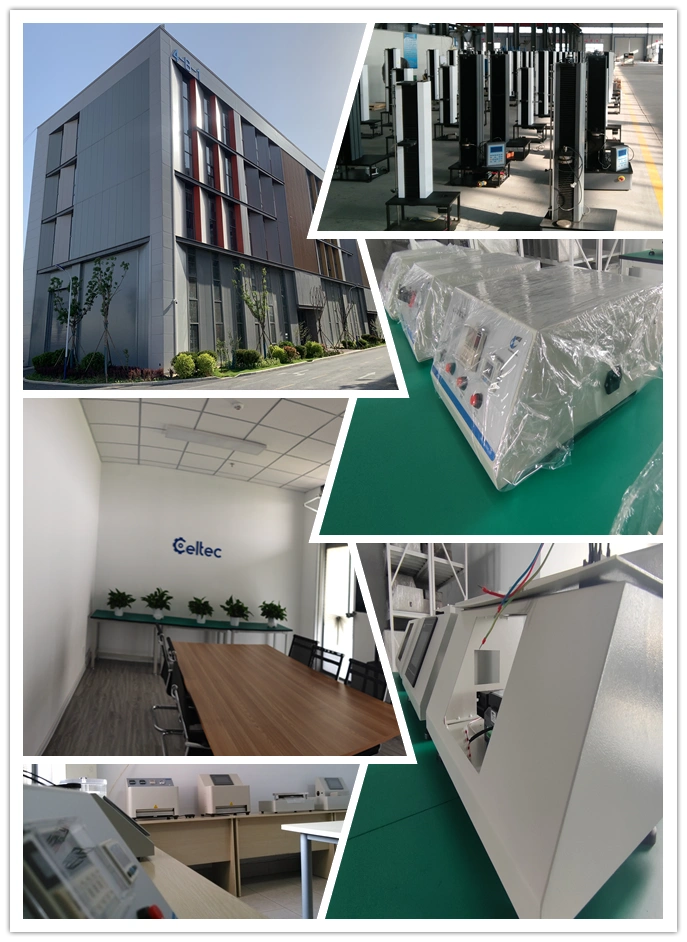
With many years of R&D and production experience, we focus on packaging, medicine, food, and electronics. We have a strong R&D team and modern manufacturing system to ensure leading product quality and technical level.
02
Strong custom development capabilities
With deep technical accumulation, we provide tailor-made solutions, including function adjustment, software customization, and automation transformation, to flexibly respond to various testing needs and improve testing efficiency.
03
Complete after-sales service system
With a technical support and after-sales service network covering the national and overseas markets, we provide full-service services such as operation training and remote diagnosis to ensure that customers are worry-free and minimize downtime.